






Colorado Amends Its Community Property Death Act for 2026


Last updated 2026-07-31 · Reviewed by Diedre Wachbrit Braverman
Colorado real estate owned by a couple who built their assets in a community property state now falls under a broader version of state law. House Bill 26-1189, signed April 13, 2026, and effective August 12, 2026, amends Colorado’s Uniform Community Property Disposition at Death Act so the act reaches real property located in Colorado no matter where the decedent was domiciled at death. The prior version of the statute did not address that situation.
Under 26 U.S.C. § 1014(b)(6), a surviving spouse’s one-half share of community property gets a stepped-up basis to fair market value at the first spouse’s death, the same treatment the decedent’s half already receives. Ordinary joint tenancy property does not receive the same treatment. Only the decedent’s half steps up, and the survivor keeps the original basis on the rest. Whether Colorado law treats a property as community property decides which rule applies, and House Bill 26-1189 changes which Colorado real estate qualifies.
What House Bill 26-1189 Changes
House Bill 26-1189 amends a single provision inside the Uniform Community Property Disposition at Death Act, part of the estate planning framework Colorado uses to determine how property passes at the first spouse’s death. Before the amendment, Colorado Revised Statutes § 15-20-103(1)(a) applied the act’s rules only to property left behind by a decedent who was domiciled in Colorado at the time of death. A couple who once lived in a community property state, then moved to Colorado but relocated again before the first spouse died, could own Colorado real estate the act never reached.
The new § 15-20-103(1)(b) removes that condition. Regardless of where the decedent was domiciled at death, the act now covers real property located in Colorado that is traceable to community property acquired under the law of the state where the decedent or the surviving spouse was domiciled when the property was acquired, or when it became community property. Income, rent, profit, and appreciation traceable to that real estate are covered on the same terms.
Why Community Property Status Changes the Basis Calculation
Community property is property owned equally by both spouses under the marital property law of certain states, without regard to which spouse earned or purchased it. California is the community property state most Colorado transplants come from, though Texas, Arizona, Nevada, Washington, and several other states use the same system, each with its own version of the underlying rules.
A surviving spouse’s half of community property receives a stepped-up basis to fair market value under 26 U.S.C. § 1014(b)(6), the same treatment already given to the decedent’s half. Ordinary joint tenancy property receives only the decedent’s step-up. The survivor’s original basis on the rest carries forward unchanged.
Many Colorado families have adjusted how they plan around estate tax exposure since the federal exemption increased, and House Bill 26-1189 adds a state-law wrinkle specific to real estate connected to a community property state.
The Domicile Gap the Amendment Closes
The gap the amendment closes is narrow but real for families who relocated to Colorado from a community property state. A couple who spent their working years in California, a community property state, and later bought property in Boulder County while still domiciled in California, held Colorado real estate that the prior version of Section 15-20-103 did not reach. If the decedent died while domiciled somewhere other than Colorado, the Colorado property fell outside the statute’s disposition rule regardless of its community property character.
House Bill 26-1189 removes the domicile condition for real property physically located in Colorado. Braverman Law Group’s estate planning attorneys now confirm community property character for a client’s Colorado real estate on that basis alone, without first establishing where the client was domiciled at death. The change applies to the property itself, tied to where it sits, rather than to whichever state happened to be the decedent’s last address.
How Retitling Colorado Property Can Complicate Its Community Property Character
Colorado law presumes that property acquired while a spouse was domiciled in a community property state remains community property under Colorado Revised Statutes § 15-20-105, even after the couple moves to Colorado. That presumption can be rebutted, and the character can also be changed deliberately. Section 15-20-104 allows spouses domiciled in Colorado to partition or reclassify community property into separately owned property, but only through a signed written record. Placing Colorado real estate connected to a community property state into a properly drafted trust can document its character clearly, rather than leaving that determination to a presumption that a family member or a court has to reconstruct later.
Under Section 15-20-106, one-half of covered property belongs automatically to the surviving spouse and is not subject to the decedent’s disposition at death. The other half passes under the decedent’s estate plan or by intestacy. A Colorado will or revocable trust drafted without accounting for this can misstate who owns what.
What Relocating Families Should Review Now
If you moved to Colorado from a community property state and still own real estate connected to that period, you have a reason to review your title and estate planning documents before House Bill 26-1189 takes effect on August 12, 2026. A deed alone rarely states whether the underlying property is community property. That determination depends on where and when it was acquired, and whether any partition or reclassification record was ever signed.
Financial advisors and CPAs coordinating your estate plan should confirm this status before relying on a full basis step-up at the first spouse’s death, since only correctly characterized community property qualifies under 26 U.S.C. § 1014(b)(6). Braverman Law Group works with clients and their financial advisors on this kind of review as part of ordinary estate plan updates for families who relocated to Colorado.
Discussing Community Property Real Estate With Braverman Law Group
Braverman Law Group, LLC works with Boulder-area families and their financial advisors to confirm how Colorado real estate is characterized under state and federal law before it becomes part of an estate plan. The firm’s estate planning attorneys review deeds, prior titling decisions, and the underlying acquisition history behind property connected to a move from a community property state. Contact Braverman Law Group at (303) 800-1588 or through its contact page to schedule a review of how House Bill 26-1189 affects a specific piece of Colorado real estate.
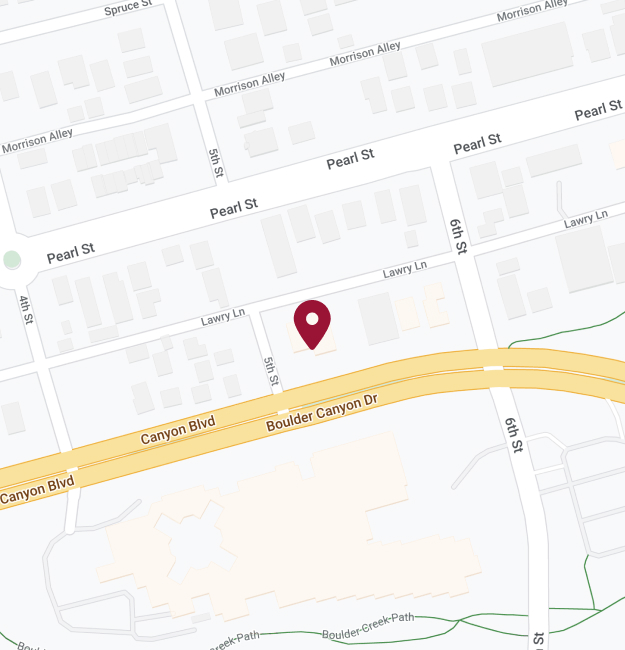
Address
Located in downtown Boulder, across from the Justice Center. Take Canyon Boulevard to 5th Street. Our building is right on the corner of 5th and Canyon, with exposed red brick on the front. We offer onsite underground parking just to the right after you turn onto 5th. An elevator takes you to our open and light offices on the second floor.


