Wills - Trusts - Estates
Serving All of Colorado




Part of our high net worth estate planning practice at Braverman Law Group.
Twenty questions we hear most often from families with estates ranging from the federal exemption into nine figures.
Our clients’ wealth came from one of three places. Some built it and still manage it: real estate they own and operate, or portfolios they invest themselves. Some earned it as employees, in concentrated stock and options at companies that grew faster than anyone planned for. Some inherited it, as beneficiaries of trusts an earlier generation wrote. We do not represent founders of operating businesses.
Where the wealth came from usually matters more than the size of it, because it decides what the plan has to solve — illiquidity and property in several states, transfer restrictions and blackout windows, or a trustee relationship you didn’t choose.
The number still changes the toolkit, in roughly four bands.
Below the exemption, currently $15 million per person and $30 million for a married couple, there is no federal estate tax exposure. The work is probate avoidance, incapacity, and protecting what your beneficiaries receive. Counterintuitively, this is the tier where you generally want assets in your estate, so your heirs get the step-up in basis.
At or near the exemption, the questions become whether to use exemption now, whether to rely on portability or fund a credit shelter trust, and what happens if you move to a state that imposes its own estate tax at a far lower threshold.
At multiples of the exemption, the work shifts to freezing values and leveraging what remains: Grantor Retained Annuity Trusts, installment sales to grantor trusts, valuation discounts, generation-skipping allocation, and life insurance held outside the estate to supply liquidity. These stack rather than compete.
In nine figures, the questions change in kind rather than degree — structural philanthropy, family governance across generations, and whether a family office or a private trust company earns its keep.
The questions below are the ones that come up most often, at kitchen tables and increasingly in the comment sections of estate planning videos and posts. Every answer here is general information. The right strategy for your family will depend on your assets, your goals, and your jurisdiction, and that is precisely the work we do.
Under the One Big Beautiful Bill Act (OBBBA), the federal estate and gift tax exemption rose to $15 million per individual ($30 million per married couple) on January 1, 2026, and the exemption is indexed for inflation beginning in 2027. Unlike the 2017 Tax Cuts and Jobs Act (TCJA), the OBBBA contains no sunset provision, so the higher exemption is, for now, permanent. The 40% top federal rate continues to apply to estates above the exemption, and state estate or inheritance taxes (with much lower thresholds in states like New York, Massachusetts, Oregon, and Washington) can still apply on top.
Braverman Law Group can tailor a federal-and-state coordinated plan that pressure-tests your exposure at every wealth tier and adjusts as exemption amounts, residency, and family circumstances evolve.
For HNW families with estates well above the exemption, lifetime gifting remains powerful — but the case is now about removing future appreciation from your estate, not racing a sunset deadline. A $20 million block of equity gifted today is removed from your estate along with all of its growth; if that block doubles over a decade, the entire $20 million of appreciation passes free of federal estate tax. VHNW and UHNW clients with concentrated positions, pre-Initial Public Offering (pre-IPO) equity, or rapidly compounding private investments often benefit most.
Our attorneys at Braverman Law Group can model the trade-offs — gift vs. hold, gift in trust vs. outright — and configure a gifting plan calibrated to your liquidity, control, and step-up-in-basis priorities.
A revocable living trust keeps assets out of probate, preserves privacy, and lets you change terms during life — but it does not remove assets from your taxable estate. An irrevocable trust generally cannot be unwound, but assets placed in it (and their future growth) are removed from your taxable estate and can be shielded from creditors and divorcing spouses. Most HNW families use both: a revocable trust as the foundation for probate avoidance and incapacity planning, plus one or more irrevocable trusts — Spousal Lifetime Access Trusts, Intentionally Defective Grantor Trusts, Irrevocable Life Insurance Trusts, dynasty trusts, and Beneficiary Defective Inheritor’s Trusts (BDITs, sometimes simply called Inheritor’s Trusts) — for transfer-tax planning. A BDIT is a particularly elegant vehicle for the next generation: it is funded (typically by a parent or grandparent) so that the beneficiary, rather than the grantor, is treated as the trust’s owner for income-tax purposes, which lets the beneficiary access and manage the assets with significant flexibility while keeping those assets outside the beneficiary’s own taxable estate and shielded from creditors and divorcing spouses.
Braverman Law Group designs layered trust architectures that combine the flexibility of revocable planning with the tax efficiency of irrevocable vehicles, customized to your family’s risk tolerance and control preferences.
Above the exemption, the standard playbook combines several moves: (1) freeze the value of high-growth assets in your estate using Grantor Retained Annuity Trusts (GRATs) or installment sales to Intentionally Defective Grantor Trusts (IDGTs), (2) discount illiquid family interests through Family Limited Partnerships (FLPs) or Limited Liability Companies (LLCs), (3) leverage the generation-skipping transfer (GST) tax exemption with dynasty trusts so transfers benefit multiple generations without re-taxation, and (4) fund estate-tax liability with life insurance held outside the estate in an Irrevocable Life Insurance Trust (ILIT). For UHNW estates, these techniques are typically stacked rather than chosen one-by-one.
Our team at Braverman Law Group can engineer an integrated freeze-and-leverage strategy specific to your asset mix, expected growth rates, and family goals.
A Spousal Lifetime Access Trust (SLAT) is an irrevocable trust one spouse creates for the benefit of the other (and often descendants). Assets transferred to the SLAT use the grantor’s lifetime gift exemption, are removed from both spouses’ taxable estates, and grow estate-tax-free — yet the beneficiary spouse retains indirect access through distributions. SLATs are particularly popular for HNW and VHNW couples who want to use significant exemption now without giving up all economic access. The classic risks are divorce, the beneficiary spouse’s death, and the reciprocal trust doctrine if both spouses set up mirror-image SLATs.
Braverman Law Group can structure non-reciprocal SLATs with carefully differentiated terms, trustee provisions, and distribution standards so they accomplish the tax goal without inviting Internal Revenue Service (IRS) challenge — and we can build in “floating spouse” provisions that define the beneficiary spouse as whoever the grantor is currently married to, so that a divorce automatically removes a former spouse from the trust and protects the family from the classic SLAT divorce trap.
A Grantor Retained Annuity Trust (GRAT) lets you transfer an asset into a trust, receive annuity payments back over a term (often 2–10 years), and pass any growth above the IRS Section 7520 hurdle rate to your beneficiaries gift-tax-free. GRATs shine for rapidly appreciating assets — pre-IPO shares, concentrated public stock, a fast-growing private business — and for clients who have already used their lifetime gift exemption.
A “rolling” GRAT strategy — a series of short-term (often two-year) GRATs run back-to-back — addresses two specific risks. First, mortality risk: if you die during the term, the GRAT assets get pulled back into your estate, so shorter terms reduce that exposure. Second, volatility risk: each short GRAT stands on its own, which means a strong year’s gains pass to your heirs immediately while a weak GRAT can be replaced with a fresh one — instead of letting one bad year wipe out the gains of a longer, single-term GRAT.
Braverman Law Group can craft short-term and long-term GRAT ladders, including zeroed-out structures, that match the volatility profile and time horizon of the specific assets you want to move.
An Intentionally Defective Grantor Trust (IDGT) exploits a deliberate mismatch between income-tax and transfer-tax rules: you are treated as the owner for income tax purposes (so trust income flows back onto your Form 1040), but the assets are not in your taxable estate. Paying the trust’s income taxes effectively becomes an additional, tax-free gift to your heirs each year. Combined with an installment sale to the IDGT, this technique can move large amounts of appreciating property out of your estate at a very low gift-tax cost.
Our firm can configure IDGT sales — including seed-gift sizing, promissory note terms, and toggle provisions — to match your cash-flow needs and your tolerance for paying the trust’s income tax.
A dynasty trust is a long-duration irrevocable trust (in some states, perpetual) that holds wealth for multiple generations without triggering estate or GST tax at each generational level. When fully GST-exempt and properly drafted, a dynasty trust can shield assets from estate taxes, creditors, and divorcing spouses across many decades. UHNW families typically situs these in jurisdictions with favorable trust law — Wyoming, South Dakota, Delaware, Nevada, Tennessee, or Alaska — and pair them with directed trustee structures so family members can guide investments without compromising tax results. Other states have meaningfully extended their rule against perpetuities as well — Colorado, for example, allows a trust to run for 1,000 years — but Wyoming remains a top-tier choice for its combination of trust duration, asset-protection statutes, and privacy.
Diedre Braverman is licensed to practice in Wyoming and can design and administer Wyoming dynasty trusts tailored to your family’s multi-generational goals, layering in trust-protector provisions so the trust can evolve as each generation’s needs change.
If a meaningful share of your wealth is illiquid — a family business, real estate, or a concentrated private position — your estate may owe substantial federal and state estate tax without easy cash to pay it. An Irrevocable Life Insurance Trust (ILIT) owns one or more life insurance policies outside your estate, and the death benefit provides tax-free liquidity exactly when your heirs need it most. The grantor cannot serve as trustee, premiums must be paid through carefully documented Crummey gifts, and transfers of existing policies trigger a three-year lookback under Internal Revenue Code (IRC) §2035(d) — all reasons to draft and administer the ILIT precisely.
Braverman Law Group can design and administer ILITs that match the projected estate-tax bill, including survivorship (second-to-die) policies for married UHNW clients.
Start with a question most planning conversations skip: can the shares move at all. Private company stock almost always carries transfer restrictions, and a plan built on gifting shares into a trust is worthless if the company’s charter, stockholders’ agreement, or equity plan requires board consent that nobody intends to give. We read the equity documents before we design anything.
If the shares can move, timing drives the result more than technique does. A transfer made while the company’s most recent 409A valuation is low moves a very different number than the same transfer made after a tender offer or an initial public offering prices the stock. Once a liquidity event sets a value, the opportunity to shift future appreciation out of your estate at a low gift-tax cost is largely gone. These windows are narrower than people expect and they close without notice.
Which vehicle fits depends on what stage you’re at. For pre-liquidity shares at a modest valuation, a Spousal Lifetime Access Trust (SLAT) or an installment sale to an Intentionally Defective Grantor Trust (IDGT) moves the position and its entire future growth out of your estate. For volatile public stock after a lockup expires, a Grantor Retained Annuity Trust (GRAT) — often a rolling series of short-term GRATs — captures upside without betting everything on a single term.
If your shares are Qualified Small Business Stock (QSBS) under Internal Revenue Code §1202, gifting to multiple non-grantor trusts can multiply the per-taxpayer gain exclusion, because each properly structured trust is its own taxpayer. Two cautions. The Internal Revenue Service applies anti-abuse rules under §643(f) that can collapse multiple trusts into one where the grantors and beneficiaries are substantially the same and tax avoidance is a principal purpose, so the trusts need genuinely distinct terms, beneficiaries, and non-tax reasons to exist. And QSBS turns on the company’s gross assets at the time your stock was issued — which is why employees at large, late-stage private companies frequently discover their shares never qualified, however early they joined.
Everything above interacts with constraints you don’t control: lockup periods, blackout windows, Rule 144 volume limits, and Section 16 reporting if you’re an officer or director. Exercising incentive stock options can also trigger alternative minimum tax in a year with no cash coming in to pay it. And concentration itself is a risk worth naming out loud while the number is still going up — most of your net worth sits in one company, and the same event that makes the position enormous can unmake it.
Braverman Law Group can read your equity documents, map the transfer restrictions and the timing windows that actually apply to your grants, and build the trust structures before a valuation event rather than after one. We coordinate with your tax advisor on the exercise and QSBS analysis, and we work alongside your financial advisor on diversification so the planning and the portfolio decisions aren’t made in separate rooms.
Outright bequests to adult children are exposed to their future divorces, lawsuits, business failures, and creditor claims. Holding inheritances in discretionary lifetime trusts — with a spendthrift clause and a clear distribution standard — keeps assets legally separate from the beneficiary’s marital estate and outside the reach of most creditors. In well-drafted trusts, the beneficiary themselves can serve as trustee day-to-day, preserving control and family autonomy. The key protective feature is a built-in step-down mechanism: if a credible threat emerges — a divorce filing, a lawsuit, a creditor claim, a bankruptcy — the beneficiary resigns and an independent successor or co-trustee steps in, preserving the trust’s protective character at the moment it matters most. For higher tiers, we layer in Domestic Asset Protection Trusts (DAPTs) in friendly jurisdictions and FLP or LLC structures.
Braverman Law Group can construct multi-layered asset protection — combining beneficiary-controlled lifetime trusts with carefully drafted step-down provisions, entity structures, and jurisdictional choices — that fits both the asset class and the family member it’s intended to protect. For UHNW clients, one of our favorite combinations is the “Cowboy Cocktail”: a DAPT that holds a Wyoming Close LLC, pairing Wyoming’s strong self-settled spendthrift statute with the charging-order protection and privacy of a Wyoming close-company structure.
Each charitable vehicle solves a different problem. A Donor-Advised Fund (DAF) is simple, low-cost, and best for clients who want immediate deductions and flexibility on grant timing. A private foundation offers maximum control, family employment, and a multi-generational philanthropic platform — but comes with 5% payout rules, excise taxes, and meaningful administration. A Charitable Remainder Trust (CRT) is uniquely powerful when you have a highly appreciated asset: you transfer the asset, defer the capital gains, receive an income stream for life or a term of years, and leave the remainder to charity. Many UHNW families use all three together.
Our attorneys at Braverman Law Group can design a coordinated philanthropic plan — DAF, foundation, CRT, or a hybrid — that aligns with your tax profile and your family’s charitable vision.
International assets and cross-border family members create real complications: conflicting inheritance laws, forced heirshipregimes in many civil-law jurisdictions, potential double taxation despite the United States’ network of estate and gift tax treaties with only 16 countries, and documents that may not be honored across borders. Common solutions include situs-specific wills for foreign-held property, careful coordination of trusts with the relevant jurisdictions, currency and reporting considerations (Report of Foreign Bank and Financial Accounts (FBAR), Form 8938, Form 3520), and pre-immigration or pre-expatriation planning when residency or citizenship is changing.
Braverman Law Group can coordinate a cross-border plan with local counsel in each relevant jurisdiction, tailored to your specific countries, asset types, and family members.
Yes — and this is one of the most important trade-offs in post-OBBBA planning. Assets you transfer during life carry over your original cost basis; assets your heirs inherit at death generally receive a stepped-up basis to fair market value. The right answer depends on which tax is larger: the 40% federal estate tax that applies to value above the exemption, or the ~20–23.8% federal capital-gains tax (plus state) that your heirs would owe on the appreciation if they sold after a step-up.
For an estate already above the exemption, lifetime gifting typically saves more when: (1) the asset is expected to appreciate significantly in the future — that future growth happens outside your estate and avoids the 40% rate entirely; (2) the asset has a relatively high basis already, so the step-up your heirs would otherwise capture is modest; (3) your heirs are unlikely to sell soon after inheriting, making the step-up less valuable in present-value terms; or (4) the asset throws off income or appreciation that compounds inside an irrevocable trust for the benefit of multiple generations. Conversely, holding until death usually wins for low-basis, low-growth assets your heirs are likely to liquidate quickly. Upstream gifting to an older family member can sometimes capture both the lifetime exemption and the step-up.
Braverman Law Group can run the gift-vs-hold analysis asset-by-asset and structure transfers to capture step-up where it materially outperforms an outright lifetime gift.
Roughly 70% of family wealth fails to make it to the second generation, and most of those failures trace to communication and preparation gaps, not tax mistakes. Best practice for HNW and VHNW families is a multi-year series of conversations that begin with values and family history before moving to numbers, supplemented by family meetings, financial-literacy education for younger members, and clear governance for any shared assets. UHNW families often formalize this with a family constitution, regular family assemblies, and “trust reveals” that introduce next-gen beneficiaries to the structures designed for them.
Braverman Law Group can help facilitate family meetings, draft a written family governance framework, and design heir-readiness provisions inside the trust documents themselves.
A will, once filed for probate, becomes a public document — anyone can read it, including journalists, opportunists, and disgruntled relatives. A funded revocable living trust avoids probate entirely, keeps the disposition of assets confidential, and accelerates distribution to beneficiaries. For UHNW clients, we often add a privacy trust — a specialized trust (often a nominee or title-holding trust) whose sole purpose is to hold legal title to high-visibility assets such as homes, aircraft, yachts, and vehicles in the trust’s name rather than the individual’s. Public records then show the trust as owner, not you, which keeps your name off real-property records, registration databases, and the kind of online searches that journalists and opportunists run. We typically pair the privacy trust with LLCs for additional layering.
Our firm can structure a comprehensive privacy plan — trust funding, entity layering, and beneficiary anonymization — so your estate disposition stays out of the public record.
Without planning, your family may need to petition a court for guardianship or conservatorship — a public, slow, and often contentious process. A complete incapacity plan typically includes a durable financial Power of Attorney (POA) for assets outside your trust, a Medical Durable Power of Attorney designating a medical decision-maker, a Colorado Declaration as to Medical or Surgical Treatment (Colorado’s Advance Declaration) stating your end-of-life preferences, and Health Insurance Portability and Accountability Act (HIPAA) authorizations. For HNW clients, we often pair these with successor-trustee provisions, capacity standards, and family governance triggers that activate when needed.
Braverman Law Group can customize incapacity documents — including springing vs. immediate POAs, multi-person co-agent structures, and family-business decision protocols — to fit your specific circumstances.
Most families considering a single-family office have $50M–$100M+ in investable assets; below that, a multi-family officetypically delivers similar services at far lower cost. A family office consolidates investment management, tax compliance, bill-pay, philanthropy, governance, concierge services, and reporting under one roof. The real value isn’t usually cost savings — it’s continuity, customization, and confidentiality across generations. Decisions to make before launching include single vs. multi, in-house vs. outsourced functions, governance and oversight, and which jurisdiction is the entity’s home.
Braverman Law Group can advise on whether a single-family or multi-family office is right for you, structure the entity and governance documents, and coordinate the legal architecture across the office’s service lines.
For families with multi-generational wealth, prenuptial agreements are increasingly treated as a family policy rather than a per-marriage decision — applied uniformly across adult children to reduce friction and protect trust assets from being commingled into a marital estate. A well-drafted prenup confirms the separate-property character of inherited and trust-distributed assets, addresses appreciation and income, and coordinates with the inheritance trusts themselves so beneficiaries’ future spouses cannot reach trust principal in divorce.
Braverman Law Group can craft prenuptial and postnuptial agreements that integrate with your existing trust structures, drafted to be enforceable across the jurisdictions where your family members live.
Blended families confront tensions that traditional families often don’t: a surviving spouse who could redirect assets away from children of a prior marriage, stepchildren with different inheritance expectations, and old wills or beneficiary designations that haven’t been updated. Standard solutions include the Qualified Terminable Interest Property (QTIP) trust (which provides for the surviving spouse for life with the remainder passing to chosen beneficiaries on their death), the A-B / bypass truststructure, dividing Individual Retirement Accounts (IRAs) to designate separate beneficiaries, and explicit communication with both sets of children about what to expect and why.
Our attorneys at Braverman Law Group can design blended-family plans that provide for a surviving spouse, protect children from prior relationships, and minimize the predictable conflict points before they ever arise.
The strategies above are starting points — not prescriptions. The right combination for your family depends on the size and composition of your estate, where you and your beneficiaries live, your business interests, your charitable goals, and what kind of family you want to be in twenty years. Braverman Law Group designs each plan from scratch around those answers.
To schedule a confidential consultation, contact our office.
This FAQ is provided for general informational purposes only and does not constitute legal, tax, or financial advice. Estate, gift, and generation-skipping transfer tax rules, including the exemption amounts described above, are subject to change and depend on facts specific to each family. No attorney-client relationship is formed by reading this page. For advice tailored to your circumstances, please consult Braverman Law Group or another qualified estate planning attorney in your jurisdiction.
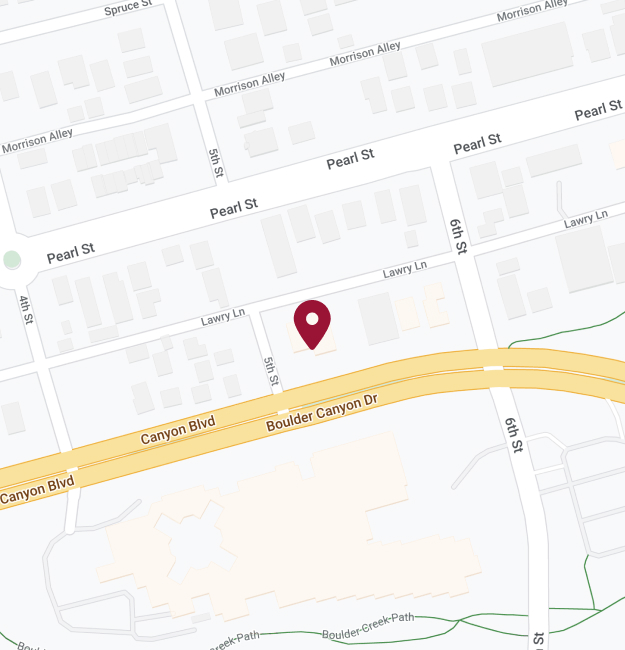
Located in downtown Boulder, across from the Justice Center. Take Canyon Boulevard to 5th Street. Our building is right on the corner of 5th and Canyon, with exposed red brick on the front. We offer onsite underground parking just to the right after you turn onto 5th. An elevator takes you to our open and light offices on the second floor.


