





Naming a Charity as Beneficiary in Colorado After Senate Bill 26-118


Colorado now gives banks, brokerages, and other financial institutions a deadline for paying a charity that a donor named as beneficiary on an account, policy, or plan. Senate Bill 26-118, effective August 12, 2026, added C.R.S. § 15-15-104 to the Colorado Probate Code to govern how these gifts are paid and when a charity may have to return part of one to the donor’s estate.
An institution holding a charitable beneficiary designation must pay the charity within 60 calendar days after the charity submits a complete affidavit, unless a court orders otherwise or federal law provides otherwise. The same section requires the charity to give funds back when the estate cannot cover its creditors, statutory family allowances, or a surviving spouse’s elective share. Braverman Law Group, LLC advises Colorado donors, and the personal representatives who settle their estates, on how these designations fit within a broader estate plan.
What Counts as a Charitable Beneficiary Designation
A charitable beneficiary designation is an instruction on an account, policy, or plan, rather than in a will, that sends the asset to a charity when the owner dies. The new statute calls these assets “designated benefits” and limits them to four kinds.
- Insurance and annuities: proceeds payable at death under a life insurance or annuity policy.
- Bank accounts: savings and checking accounts with a payable-on-death designation.
- Securities: securities registered in beneficiary form with a payable-on-death designation.
- Retirement plans: death proceeds of a pension, profit-sharing, retirement, or other employment-related benefit plan.
The act binds banks, broker-dealers, depository institutions, credit unions, and financial or institutional investors, and it applies to conduct on or after August 12, 2026.
What the Charity Submits and How Quickly It Must Be Paid
The 60-day period starts when the charity delivers an affidavit attesting to the donor’s death. It includes the donor’s name and last known address, a description of the benefits, the charity’s IRS determination letter and a signed Form W-9, a copy of the death certificate if the institution has not already been told of the death, and a corporate resolution confirming that the person signing may act for the charity.
The affidavit must carry a waiver signed for the charity. In it, the charity acknowledges that the gift may be needed to pay creditor claims, statutory allowances, or the unpaid balance of a surviving spouse’s elective share, and that it may be liable for those amounts if the estate falls short.
Where federal law requires the institution to take additional steps before paying, the act substitutes a 120-day timeline for the 60-day one. The act bars two conditions on payment. An institution may not require the charity to open an account with it, or require the charity’s staff or board members to provide personal information such as Social Security or driver’s license numbers. The Division of Banking, the Financial Services Board, and the Division of Securities can each enforce the section.
An estate plan that leaves part of a charitable gift by designation and the rest by will or trust has more than one document to keep in agreement. If that describes your situation, call Braverman Law Group at (303) 800-1588. The first conversation is free.
When the Donor’s Estate Can Recover Part of the Gift
Under C.R.S. § 15-15-103, the recipient of a nonprobate transfer can be liable for allowed creditor claims and statutory allowances to the decedent’s spouse and children, to the extent the estate cannot pay them, and never for more than the value the recipient received. That section reaches transfers by a donor whose last domicile was Colorado and who could have revoked the transfer alone.
Several categories are excluded from that creditor-claim rule, including life insurance and annuity proceeds paid under a beneficiary designation, and funds held in or payable from a pension, retirement plan, IRA, deferred compensation plan, or 529 plan. A charity’s exposure to creditor claims therefore falls mainly on payable-on-death bank accounts and securities registered in beneficiary form. The new act lists a surviving spouse’s elective share under C.R.S. § 15-11-209 as a separate source of liability, and its waiver language does not apply the § 15-15-103 exclusions to that claim.
A proceeding against a nonprobate recipient generally must be commenced within one year after the death, and only after a surviving spouse, a child, or a creditor makes a written demand on the personal representative. A surviving spouse claiming an elective share must file within nine months after the death or six months after the will is probated, whichever expires later, and a petition filed more than nine months after the death reaches nonprobate transfers only under a court-granted extension.
Senate Bill 26-118 adds the collection procedure once liability exists. A charity liable under either statute must return the amount needed within 60 days after written notice from the personal representative. If it does not, statutory interest accrues on the unreturned amount for each day it remains outstanding, and a court may set aside the payout, bar disposal of the funds, or award reasonable attorney fees.
What a Personal Representative Should Send, and When
A personal representative settling a Colorado estate with a shortfall has two notices to consider. Written notice to the charity of a potential unpaid claim, allowance, or elective share requires the charity to hold the gift, or the portion needed to cover it, in a constructive trust until the claim is decided. A constructive trust is an obligation imposed by law to hold property for someone else’s benefit, here the estate.
Under § 15-15-103, an institution that pays a nonprobate recipient according to the account’s terms is released from claims for that payment unless it first received written notice from the personal representative that the estate is nonexistent or insufficient. A personal representative who expects the estate to fall short should weigh sending that notice early, since the release otherwise attaches when the institution pays.
Planning Points for Donors and Their Advisors
The choice of asset for a charitable gift affects how easily the estate can recover it. A retirement account or life insurance policy left to charity sits outside the creditor-claim rule in § 15-15-103, while a payable-on-death bank account does not.
The same section lets one instrument direct how liability is apportioned among nonprobate recipients, with the later instrument controlling if two conflict. A will or trust can state whether a charitable designation should bear any share of an estate shortfall. Braverman Law Group handles high-net-worth estate planning for Boulder-area families whose assets sit at several institutions, each with its own beneficiary form. CPAs, financial advisors, and trust officers who keep clients’ beneficiary records current are often the first to see a designation drift out of step with the rest of the plan.
Coordinating a Charitable Gift With the Rest of a Colorado Estate Plan
Senate Bill 26-118 sets deadlines both for paying out a charitable designation and for recovering it when the estate falls short. Braverman Law Group reviews these designations, and how each fits with a will or trust, for donors and personal representatives in Boulder County, Denver, and Larimer County. Call Braverman Law Group at (303) 800-1588 or contact the firm online to schedule a free consultation.
Address
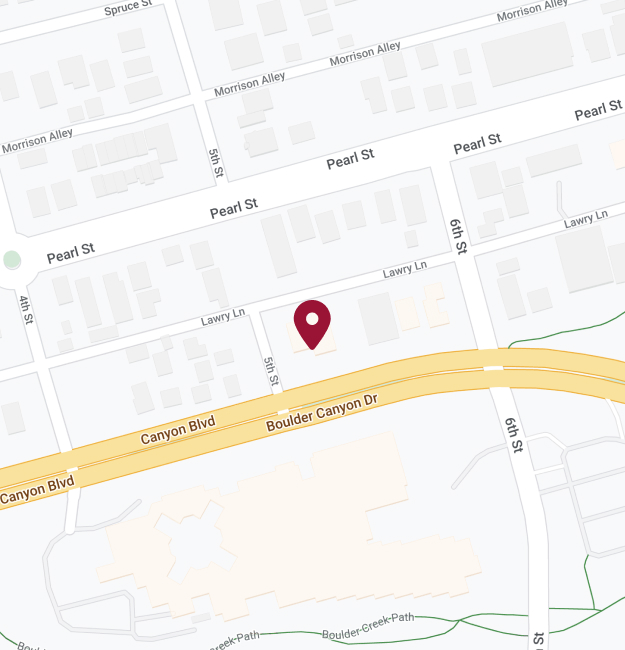
Located in downtown Boulder, across from the Justice Center. Take Canyon Boulevard to 5th Street. Our building is right on the corner of 5th and Canyon, with exposed red brick on the front. We offer onsite underground parking just to the right after you turn onto 5th. An elevator takes you to our open and light offices on the second floor.


