
Wills - Trusts - Estates
Serving All of Colorado




A mother in Longmont called us three weeks after her own mother died. The grandmother had left $180,000 to her disabled grandson, outright, in a will she’d written herself. The check had already cleared. Her grandson lost his Supplemental Security Income the following month, and his Medicaid went with it. The money that was supposed to make his life easier paid for the care Medicaid had been covering, and when it ran out, the family started the eligibility process over from the beginning.
Nothing about that was careless. She loved her grandson and she left him money. The gap was between what she intended and what the benefit rules do with an inheritance that arrives in someone’s name.
I know that gap from both sides. My brother requires around-the-clock care, and I’m also raising a child with significant disabilities, so the decisions described on this page are ones I’ve made for my own family as well as for clients. I’ve also served as an expert witness in cases involving special needs trusts and Medicaid eligibility, which means I’ve seen how closely these plans get examined when someone challenges them.
Closing that gap is what special needs planning does.
Supplemental Security Income and Medicaid are needs-based. Eligibility turns on countable resources, and the resource limit is only $2,000.
Social Security Disability Insurance and Medicare work differently. They’re earned through work history, not need, so an inheritance doesn’t disturb them. Many families are on some combination of the four, and the first real question in any plan is which programs are actually in play. The answer changes the design.
Where needs-based benefits are involved, the fix is not to disinherit the child and leave their share to a sibling with instructions. That arrangement is unenforceable. It also exposes the money to the sibling’s divorce, the sibling’s creditors, and the sibling’s own death, none of which anyone plans for and all of which happen.
The fix is a properly drafted trust.
Third-party special needs trusts hold someone else’s money for the benefit of a person with a disability. Parents and grandparents use these. Because the assets were never the beneficiary’s, there’s no Medicaid payback at death, and whatever remains can pass to your other children or wherever you direct. This is the trust most families come to us for, and it can be created inside your revocable living trust to be funded at your death, or established and funded now.
First-party special needs trusts hold the beneficiary’s own money. A personal injury settlement, an inheritance that already arrived outright, retroactive benefits. These are authorized under 42 U.S.C. § 1396p(d)(4)(A) and are often called d4A trusts. They must be established before the beneficiary turns 65, and they must include a provision repaying the state Medicaid agency at death up to the total assistance paid. Since the Special Needs Trust Fairness Act of 2016, a beneficiary with capacity can establish one themselves rather than needing a parent, grandparent, guardian, or court to do it.
Pooled trusts under § 1396p(d)(4)(C) are run by nonprofit organizations that maintain separate accounts for each beneficiary but invest the funds together. They make sense for smaller amounts where a private trust’s administration costs would consume the benefit, and for beneficiaries over 65 where a d4A trust isn’t available.
Which one applies is decided by whose money it is. That single fact drives everything else.
A special needs trust fails in a specific way. It fails when the language gives the beneficiary something a benefits examiner can treat as an available resource.
Discretion has to be absolute. The familiar health, education, maintenance, and support standard that appears in most trusts is the wrong standard here, because a trustee who must pay for support has created something the beneficiary can demand. We draft sole and absolute discretion, with no ascertainable standard the beneficiary can enforce.
The beneficiary can’t have the power to revoke, to direct distributions, or to compel the trustee. No withdrawal rights. No mandatory income.
Retirement accounts need particular care. Under the SECURE Act, most beneficiaries have to empty an inherited retirement account within ten years, which is a tax problem and a benefits problem at once. A disabled or chronically ill beneficiary is an eligible designated beneficiary, though, and can still take distributions over life expectancy. Getting that treatment through a trust requires drafting to specific requirements. A generic see-through trust won’t do it, and naming your child directly on the account undoes the plan you paid for.
That last mistake is the most common one we find. A family builds a careful trust and then leaves the beneficiary designation on the IRA or the life insurance policy naming the child personally, because nobody changed the form.
The primary residence is normally exempt as a resource while it’s occupied. Two of the most ordinary moves in Colorado estate planning undo that exemption, and both get made by people who were trying to be careful.
The first is a beneficiary deed. Recording one causes the property to be counted. This isn’t an interpretation; C.R.S. § 15-15-403 is titled “Medicaid eligibility exclusion” and says that a person with a beneficiary deed in effect is not entitled to medical assistance, and that executing one makes the property a countable resource under § 25.5-4-302(6). The statutory form itself, at § 15-15-404, carries the warning in capital letters on its face. People sign it anyway, usually because a title company or an online form suggested it as the easy way around probate.
The second is the revocable living trust. Colorado’s exempt-resource list is asset-specific: the principal place of residence is exempt, along with one vehicle, household goods, personal effects, and burial spaces. Non-burial trusts appear on the other list, the countable one. And a resource counts as available when the owner can sell, transfer, or dispose of it and make the proceeds available for support, which describes a revocable trust exactly. So once the house goes into the living trust, what the applicant holds is an interest in a countable trust rather than an exempt residence. The federal rule points the same direction, treating revocable trust assets as available to the person who created the trust under 42 U.S.C. § 1396p(d)(3)(A).
That’s the theory. Here’s the practice: in our experience, HCPF does not exempt a home held in a revocable living trust. We’ve seen it come out that way consistently, and we plan around it.
None of which makes the revocable living trust a bad instrument. Funding the home into it is standard advice, and for most families it’s correct advice. It just costs the exemption, and that only matters for the families where Medicaid eligibility is genuinely in play.
That’s why the first question is always which benefits are actually at stake. If long-term care Medicaid is a real prospect for you or your spouse, the answer for the house may be to leave it outside both instruments, or to use an irrevocable trust early enough to clear the five-year lookback. If Medicaid isn’t realistically in the picture, the probate-avoidance benefit of funding the home into your trust is worth having and you should take it.
There’s no rule here that’s right for everyone. There’s a question that has to get asked before the deed is recorded, and it usually isn’t.
An ABLE account under 26 U.S.C. § 529A lets a person with a disability hold savings in their own name without those funds counting against SSI, up to a capped amount, with Medicaid disregarding the balance entirely for eligibility.
The eligibility age recently changed. ABLE accounts previously required that the disability began before age 26. Under the ABLE Age Adjustment Act, that threshold moved to age 46 for tax years beginning after December 31, 2025. A great many people who were locked out are now eligible, and it’s worth revisiting if you were told no before.
ABLE accounts don’t replace a trust. Contributions are capped annually (currently at $19,000), and Medicaid can recover against the account at death in most cases. What they do well is solve the food and shelter problem described below, because an ABLE account can pay housing costs without the consequence a trust distribution would carry. In practice we use both: the trust holds the wealth, the ABLE account handles the categories where trust money is awkward.
Drafting is the smaller half of this. Most of the failures we’re asked to repair are administration failures, made by a well-meaning parent or sibling serving as trustee who was never told the rules.
Never distribute cash to the beneficiary. Not a check, not a transfer, not a gift card. Cash and cash equivalents count as income in the month received and as a resource after that. The trustee pays vendors directly.
Shelter is the category that requires thought. Payments for housing can reduce an SSI benefit under the in-kind support and maintenance rules. Social Security removed food from the ISM calculation effective September 30, 2024, which simplified things, but shelter still counts. There are legitimate ways to handle housing, including paying through an ABLE account or having the trust own the residence outright. Reducing SSI is sometimes the right trade, and it’s a decision the trustee should make deliberately rather than discover on a notice.
Keep records as though someone will ask. At redetermination, someone will. Receipts, the purpose of each distribution, and a clean accounting.
Know your reporting obligations. Any trust established by or benefiting an applicant or member has to be submitted to HCPF’s Trust Policy and Recoveries Section for review. Separately, Colorado requires the trustee of a disability trust, as defined at C.R.S. § 15-14-412.8, to notify the Department of Health Care Policy and Financing of any distribution over $5,000, no later than thirty days after it’s made. HCPF publishes a Notification of Trust Distribution form for this, and it wants the receipts or invoices with it. For a home or a vehicle, send the deed or title. For caregiver services, send the agreement. This requirement has been in force since June 30, 2020, and trustees still miss it routinely. Separately, the trustee owes beneficiaries information and accountings under the Colorado Uniform Trust Code at C.R.S. § 15-5-813, and the Colorado Uniform Prudent Investor Act governs how the assets are invested. A trustee is personally liable for getting these wrong.
Older trusts can usually be fixed. If you’re holding an irrevocable trust drafted before the current rules, or one whose distribution language was never right, Colorado’s Uniform Trust Decanting Act at C.R.S. § 15-16-901 often allows a trustee to move the assets into a properly drafted trust without going to court. We do this regularly. An imperfect trust is rarely a dead end.
We serve as counsel to families designing a plan and to trustees administering one, including trustees whose trust someone else drafted. If you’re a professional or corporate fiduciary with a Colorado situs question, we take those engagements too.
A first conversation costs nothing and usually answers the threshold question quickly: which benefits your family member receives, whose money is involved, and whether what you have now does what you think it does.
Call (303) 800-1588, or use the contact form below.
Braverman Law Group, LLC is located in downtown Boulder and serves clients throughout Colorado. Diedre Wachbrit Braverman is licensed in Colorado, Wyoming, and California.
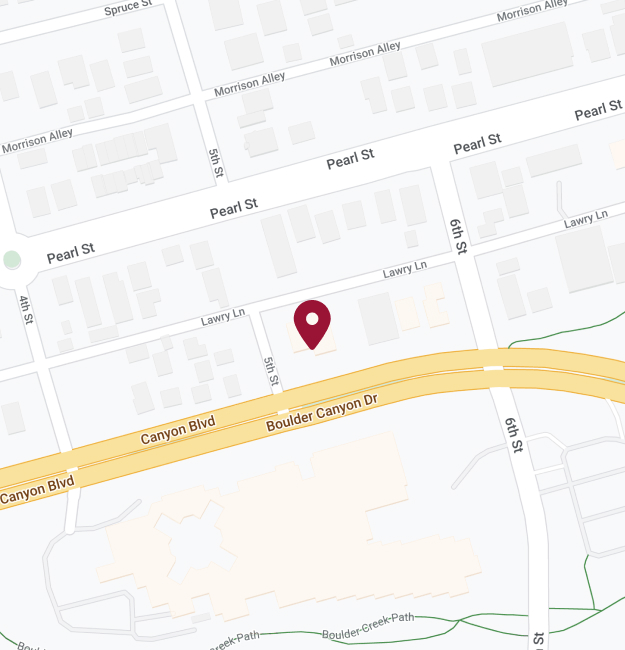
Located in downtown Boulder, across from the Justice Center. Take Canyon Boulevard to 5th Street. Our building is right on the corner of 5th and Canyon, with exposed red brick on the front. We offer onsite underground parking just to the right after you turn onto 5th. An elevator takes you to our open and light offices on the second floor.


