
Wills - Trusts - Estates
Serving All of Colorado





Liability insurance should be the first line of defense against a lawsuit. But insurance has limits, exclusions, deductibles, and coverage disputes. For individuals and families with substantial investment assets, an appropriately designed legal structure may provide a second layer of protection when insurance does not resolve an entire claim.
A Wyoming Close Limited Liability Company can sometimes serve that role—even when its owners do not live in Wyoming. It is not appropriate for every client or every asset, and it should never be considered an impenetrable shield. Used prospectively, maintained properly, and coordinated with insurance, tax, estate-planning, and home-state law, however, it can become one component of a thoughtful asset-protection plan.
A Wyoming Close LLC is a Wyoming limited liability company that elects to be governed by the Wyoming Close Limited Liability Company Supplement.
The distinction is important. Wyoming’s charging-order law applies to Wyoming LLCs generally. The Close LLC election does not create that charging-order protection. Instead, the Close LLC Supplement permits additional restrictions involving:
These restrictions can be useful when an LLC is intended to remain a closely held investment or family entity rather than an operating company with frequently changing owners.
The operating agreement remains critical. Filing articles that elect Close LLC status, without a carefully coordinated operating agreement and proper administration, does not create a complete asset-protection plan.
A properly formed, funded, and maintained Wyoming Close LLC is a legal entity separate from its owners. Courts—including bankruptcy courts—generally respect that separate existence when the entity has a legitimate purpose and is consistently treated as distinct from its members.
Asset protection therefore depends heavily on implementation. The significant risks are not random; they arise when the owner fails to respect the entity, transfers assets after a creditor problem develops, or uses the LLC as a personal account.
An “inside” liability arises from an asset or activity owned by the LLC. A claim involving rental property held by an LLC is a common example.
A properly maintained LLC may separate that liability from assets owned personally by its members. It does not protect someone from liability for that person’s own conduct. Appropriate contracts and adequate insurance may still be necessary.
An “outside” liability is a claim against an LLC owner personally that did not originate from an LLC asset.
Under Wyoming’s charging-order statute, a judgment creditor may ask a court to intercept distributions that otherwise would be paid to the debtor-member. Wyoming law makes the charging order the exclusive remedy against the member’s transferable interest, including when the debtor is the LLC’s sole member. The creditor does not thereby acquire management rights, ownership of LLC assets, or the power to force a distribution.
The judgment remains enforceable against the debtor’s other available assets. The LLC nevertheless creates an important boundary between the member’s personal liabilities and the assets legally owned by the company.
Wyoming’s charging-order protection applies to Wyoming LLCs generally. The Close LLC election adds another layer by permitting restrictions on:
These restrictions matter because a creditor’s practical objective is often to obtain control, force a liquidation, compel a distribution, or convert the debtor’s economic interest into accessible property.
A properly drafted Close LLC operating agreement limits those pathways. A transferee may receive only the economic rights associated with the transferred interest unless the operating agreement’s requirements for admission as a member are satisfied. The transferee does not automatically obtain voting, management, information, or liquidation rights.
Restrictions on withdrawal and return of capital can prevent a member—or someone claiming through the member—from demanding that the company redeem an interest or return contributed property. Carefully drafted dissolution provisions can also prevent one member’s personal financial problems from forcing the liquidation of an otherwise sound family investment entity.
The result is a more durable entity whose assets remain under the control of its authorized managers or members rather than becoming directly available to satisfy an owner’s personal judgment.
A Close LLC should not be created with a generic online operating agreement. Its protective value depends on whether the articles of organization, operating agreement, ownership structure, estate plan, and actual administration work together.
The drafting must address:
Clients are not expected to master these provisions or make isolated decisions about every technical issue. An experienced Wyoming attorney will know how to address most of them within a coordinated structure based on the LLC’s assets, ownership, management, and planning purpose. The attorney’s role is to identify the provisions that require a client’s personal input, explain those choices clearly, and draft the remaining terms so they work together without burdening the client with unnecessary technical decisions.
Overly rigid restrictions can make the company impractical to operate, interfere with estate planning, or create unnecessary tax and succession problems. Restrictions that are too loose may allow a creditor, transferee, former spouse, or successor to acquire rights that the structure was intended to withhold.
The operating agreement must therefore preserve asset-protection features without preventing legitimate investment management, tax distributions, estate-plan transfers, or succession following death or incapacity.
A Wyoming Close LLC must function as a genuine legal entity. Its protection can be weakened or lost when the facts show that the owner did not treat the company as separate.
Specific problems include:
A bankruptcy filing does not automatically cause a properly maintained LLC to be disregarded. The bankruptcy trustee will examine the same concrete facts: ownership, timing of transfers, observance of entity separateness, personal use of company assets, recordkeeping, solvency, and whether the entity had a legitimate purpose.
The strongest structure is established while circumstances are stable, funded with appropriate assets, documented carefully, and administered consistently.
Forming an LLC in Wyoming does not eliminate every other state’s authority. The analysis should address:
California residents require particular care. An out-of-state LLC that is registered or considered to be doing business in California may have California filing obligations and may be subject to California’s annual LLC tax and income-based fee. For a California resident, however, a carefully established and managed Wyoming LLC can eliminate those obligations when its business, management, property, office, and other connections are structured so that the LLC is not doing business in California and has no other California filing nexus.
An LLC should be operated as a real legal entity, not treated as another name for the owner’s personal account.
Depending on the structure, good administration may include:
The operating agreement should match how the company will actually be managed. Elaborate restrictions that the members routinely ignore may undermine the credibility of the structure.
A Wyoming Close LLC may deserve consideration when a client:
It may be a poor fit when the expected benefit does not justify the additional administration, tax filings, professional fees, or complexity created by using an out-of-state entity.
An LLC should not be designed in isolation from the client’s estate plan.
The membership interest may be owned by an individual, a revocable trust, an irrevocable trust, or another entity. Each arrangement produces different consequences involving management, incapacity, succession, creditor protection, estate taxes, income taxes, and beneficiary control.
For families with significant wealth, the LLC may also need to coordinate with inheritance trusts, domestic asset-protection trusts, gifting strategies, family governance provisions, and the client’s broader investment structure.
Braverman Law Group helps clients evaluate whether a Wyoming Close LLC adds meaningful protection or unnecessary complexity.
Our analysis begins with the client’s assets, insurance, liabilities, residence, family circumstances, tax profile, and estate plan. When the structure is appropriate, we coordinate the Wyoming entity with the client’s CPA, investment adviser, insurance professionals, and other members of the advisory team.
Diedre Braverman is admitted to practice in Wyoming, Colorado, and California and has more than 25 years in the practice of private wealth and estate planning.
No. A non-resident can form and own a Wyoming Close LLC. The company must comply with applicable Wyoming requirements and any tax, reporting, or other obligations arising where its office, assets, management, or business activities are located.
Not automatically. Wyoming’s charging-order statute applies to Wyoming LLCs generally. The Close LLC election adds statutory support for restrictions involving transfers, withdrawal, return of capital, and dissolution. Whether those features provide meaningful additional value depends on the design and purpose of the entity.
A Wyoming court may issue a charging order directing distributions that otherwise would be paid to the debtor-member to the creditor instead. The creditor does not thereby become a manager or acquire the right to compel a distribution under Wyoming law.
A properly formed and maintained Wyoming LLC should be treated as a legal entity separate from its owner. Problems arise when the owner commingles funds, uses company assets personally, ignores the operating agreement, fails to document transactions, or transfers assets after a creditor problem has developed.
The objective is to create and operate a genuine investment entity—not merely place an LLC label on assets that the owner continues to treat as personal property.
Wyoming’s charging-order statute expressly includes a judgment debtor who is the LLC’s sole member. The structure should still have a legitimate purpose, complete records, a properly drafted operating agreement, separately titled assets, and financial activity that is demonstrably separate from the owner.
That is too late for effective planning. Transfers made after a claim, demand, default, or lawsuit has arisen may be challenged as voidable transfers. Asset-protection planning should be completed while circumstances are stable and before a specific creditor problem exists.
A Wyoming Close LLC is a specialized planning tool—not an off-the-shelf product. Its value depends on the assets placed inside it, the operating agreement, insurance, applicable state law, tax treatment, and how consistently the entity is maintained.
Contact Braverman Law Group to discuss whether a Wyoming Close LLC should be included in your broader estate and asset-protection plan.
This page provides general information and does not constitute legal or tax advice. Reading it does not create an attorney-client relationship. Asset-protection results depend on the facts, applicable law, timing, and judicial decisions; no particular result is guaranteed.
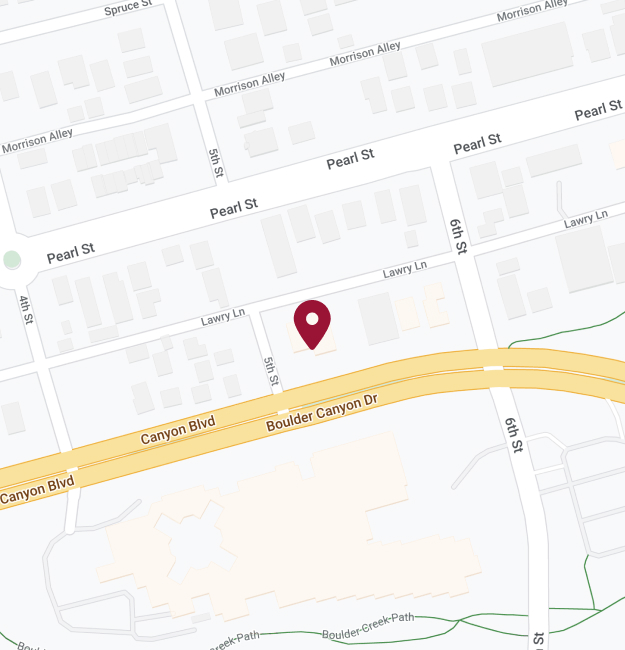
Located in downtown Boulder, across from the Justice Center. Take Canyon Boulevard to 5th Street. Our building is right on the corner of 5th and Canyon, with exposed red brick on the front. We offer onsite underground parking just to the right after you turn onto 5th. An elevator takes you to our open and light offices on the second floor.


